Bose Soundlink Micro Gen 2 Honest Review — Is the Hype Justified?
I've been using the Bose SoundLink Micro Gen 2 for several months now, and after taking it to the beach, commuting with it, and using it around the house, I wanted to share a deeply practical, hands-on review. I bought this because I wanted a pocketable speaker that actually sounded good at near-field listening, survived a few rough drops, and didn't sound like a tin can when I turned up the volume. What I found was a mix of very pleasing design and sound choices, some compromises that come with the form factor, and a few annoyances that only become obvious after living with the speaker day to day.
Why I chose the SoundLink Micro Gen 2
Before I bought it I was balancing portability, build quality, and sound. I own a few larger Bluetooth speakers, but I wanted something I could toss in a backpack or hook to a stroller. The Gen 2 looked promising on paper and in early reviews—small, rugged, and from a brand known for clarity—so I decided to test whether Bose could make a tiny speaker feel like a premium listen rather than a compromise.
Design and build: small but thoughtful
Out of the box the Micro Gen 2 feels like it was designed to be handled a lot. The body is compact and solid; the soft-touch silicone around the outside makes it easy to grip and reassures you after a drop or two. I appreciated the built-in strap: it's a simple loop but strong enough to clip to a bag strap, bike handle, or the stroller arm. In my experience that strap is far more useful than it looks in photos—I've used it on hikes and bike rides and it stayed put.
One thing I noticed immediately was the control layout: big, tactile buttons on the top that you can press with wet or sandy fingers without hunting for them. Bose includes a multifunction button for voice assistant and calls, and dedicated playback/volume buttons. I did find that the power button is a little recessed, which helps avoid accidental turn-offs but can be slightly fiddly when my hands are cold.
Durability and water resistance
I've taken this speaker to the pool and used it in light beach sand and rain. Bose advertises it as rugged, and in my experience it lives up to that—short dunking, splashes, and dusty environments didn't faze it. I wouldn't deliberately leave it submerged for long periods, but for regular outdoor use it felt worry-free. The soft shell makes sand easy to brush off, and the speaker's grill and seals seem well executed.
Sound quality — surprisingly mature for its size
Here's the part I tested the most: how it sounds. For a speaker this small, the SoundLink Micro Gen 2 is impressively balanced. Vocals are clear and upfront, which makes podcasts and acoustic tracks very listenable. Highs are detailed without being brittle; I listened to female vocals, cymbals, and acoustic guitars and rarely felt that the speaker exaggerated sibilance.
Bass is where most tiny speakers struggle, and while the Micro Gen 2 doesn't produce chest-thumping low end (no surprise there), it delivers tight, controlled bass that sells rhythm and groove better than I expected. Tracks with electronic sub-bass obviously lose the very lowest frequencies, but the mid-bass presence gives the impression of weight that is satisfying for casual listening.
When I pushed volume toward the top the speaker held up well for close listening—there's a noticeable drop-off in richness at absolute maximum volume, and on very bass-heavy tracks the speaker can sound strained. For outdoor parties you won't get the filling-room experience a larger speaker provides, but for solo use or small groups it was loud enough and retained clarity.
Find top-rated Audio & Headphones products at great prices.
View Offers →Soundstage and imaging
I was pleasantly surprised by the soundstage. Despite being a mono-ish single-unit design, Bose managed to create a sense of space that makes music feel less boxed-in than most pocket speakers. Stereo separation obviously isn't a feature here, but instruments and vocals are distinct enough that I could pick out details and enjoy complex mixes without things turning into mud.
Connectivity and daily use
Pairing was straightforward: long press the Bluetooth button, find the device on my phone, and it paired instantly. The speaker remembers multiple devices and reconnecting has been consistent—my phone reconnects as soon as Bluetooth is enabled. I tested range in apartments and around a small house and reliably reached into the next room (~8–10 meters) with a couple of interior walls; through thicker walls the signal occasionally dropped.
The speaker supports standard hands-free calling via the built-in mic. In my calls people reported I sounded "clear" in quiet environments, but when it's windy or noisy the microphone struggles; it amplifies my voice but doesn't isolate my voice as well as a dedicated headset. That aligns with my experience using tiny speaker mics in general.
There is a companion app that handles firmware updates and some settings. In my experience it covers the basics (firmware, device info) but doesn't offer an advanced EQ. For most listeners that means the out-of-the-box tuning is what you'll live with, and I found it generally pleasant—Bose's tuning favors clarity and a slightly forward midrange.
Battery life and charging
Over several months I tested battery life under real-world conditions: a mix of music and podcasts at moderate volume (around 50–60% on my phone, which is where I usually listen). I typically got between 8–10 hours per charge in that use pattern, and sometimes a bit more if I kept the volume lower. Charging from near-empty to full took me roughly 2 hours with a modern USB-C charger.
One practical detail I appreciated: battery level notifications were reliable on my phone when the speaker connected, which made planning for longer days easier. I did notice that at very high volumes the runtime drops significantly, so if you're pushing the speaker outdoors for background music expect less than the max runtime.
What I liked and what bothered me
- What I appreciated: Excellent clarity and vocal presence for a pocket speaker; thoughtful strap and rugged feel; reliable Bluetooth reconnect; long enough battery for day trips.
- What bothered me: Not a deep-bass performer (expected), limited app EQ controls, microphone struggles in very noisy or windy environments, and the absolute maximum loudness isn't suitable for larger gatherings.
Pros & Cons
- Pros:
- Clean, balanced sound for the size
- Solid build and useful strap for portability
- Comfortable battery life for day trips
- Simple, reliable pairing and reconnection
- Cons:
- Limited bass extension compared to larger speakers
- Companion app lacks a granular EQ
- Microphone performance is average in wind/noise
- Not loud enough for large outdoor parties
How it compares (my hands-on comparison)
| Feature | Bose SoundLink Micro Gen 2 (my experience) | Original SoundLink Micro (my earlier ownership) | Typical small rival (e.g., JBL Flip series, general) |
|---|---|---|---|
| Portability | Extremely compact, built-in strap makes attachment easy | Also compact, slightly less refined strap design | Bigger footprint; some are portable but heavier |
| Sound | Cleaner mids, controlled bass, very natural vocals | Good clarity but a touch less refined at high volumes | Often punchier bass, but sometimes at expense of clarity |
| Durability | Rugged in daily use; handled swims and sand | Durable but a little less premium feeling | Many competitors are similarly water-resistant; build varies |
| Battery | Real-world ~8–10 hrs at moderate volume | Similar or slightly shorter depending on age | Varies widely; some offer longer runtimes but are larger |
| Features | Simple app & firmware updates; limited EQ | Minimal app features | Some offer stronger app EQ and party features |
Who is this speaker best for?
In my experience the SoundLink Micro Gen 2 is ideal if you value clarity, portability, and a premium-feeling device you can use outdoors without worry. It's a strong pick for:
Looking for the best Audio & Headphones deals on Amazon?
View Offers →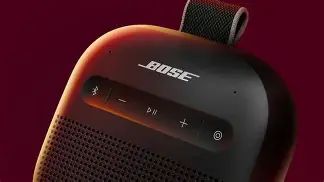
- Commuters or travelers who want a pocket-sized speaker that sounds noticeably better than phone speakers
- People who prioritize vocal clarity for podcasts and acoustic music
- Anyone who needs a rugged, attachable speaker for strollers, backpacks, or bike rides
It's less ideal if you want heavy bass or need a speaker to fill a large backyard or picnic with loud, room-filling sound. If deep bass and maximum loudness are your priority, you'll be better off with a larger portable speaker.
Buying guide — what to check before you buy
If you're considering the SoundLink Micro Gen 2, here are the practical things I checked and recommend you think about before hitting buy:
- How you’ll use it: If you want true portability and clarity at close range—great. If you want party-level volume, look at larger speakers.
- Battery expectations: My testing showed ~8–10 hours at moderate use. If you need all-day playback at loud volumes, consider a bigger battery bank speaker.
- Waterproofing and durability: Consider whether you need beach/pool resistance—this speaker handled splashes and short dunking in my tests, but I wouldn’t leave it submerged.
- Companion app and features: Don’t buy expecting a deep EQ or advanced multi-speaker party modes. The app is useful for updates but limited for tuning.
- Accessories: A small protective pouch or spare strap is handy if you plan to toss it in a bag with other gear. Consider a small power bank or USB-C charger if you travel a lot.
- Sound priorities: If you value vocal clarity and natural treble, this is a strong choice. If you prioritize raw bass output, compare against larger or bass-focused models.
Real-world tips from my use
After months of carrying it with me, a few practical tips that improved my experience:
- If you’re using it outdoors, keep it shaded. Direct sun warms the case and can slightly affect battery life and performance.
- For calls, try to face the microphone toward your mouth and shelter it from wind; it helps a lot.
- Keep the strap and silicone surfaces clean—sand and grit collect in the creases and are easy to remove if you wipe them after the beach.
- Use moderate volume for longer battery life; the battery falls faster at high volumes.
Final thoughts — is the hype justified?
After several months with the Bose SoundLink Micro Gen 2, I can say the hype is largely justified if your priorities align with what this speaker does well. In my experience it delivers clearer, more refined sound than most other pocket-sized speakers I've owned, and its build quality and strap design make it genuinely convenient to carry and use outdoors. I was surprised by how natural vocals sounded and how controlled the bass felt for the tiny enclosure.
That said, it's not magic: if you expect deep, room-filling bass or party-level volume, you'll be disappointed. The app is serviceable but not deep, and the microphone is average in noisy situations. For me, those trade-offs are acceptable given the speaker's size and convenience—I wanted something I could take everywhere and actually enjoy listening to, and the SoundLink Micro Gen 2 largely delivers that.
In short: if you want a premium, pocketable speaker that prioritizes clarity and durability over maximum loudness and heavy bass, the SoundLink Micro Gen 2 is worth considering. It’s a very good everyday carry speaker that made my podcasts, walks, and small get-togethers more enjoyable—just don’t buy it expecting a substitute for a full-sized portable speaker.