Don't Buy the Bravia Theater Quad Until You Read This Full Analysis
Introduction
The Bravia Theater Quad has entered the market with a promise to deliver immersive home-theater experiences in a compact footprint. For many buyers, "Bravia" evokes Sony's long-standing reputation for display and audio quality, and the addition of "Theater Quad" suggests a four-channel approach to surround sound that aims to bridge the gap between soundbars and full surround systems. This article provides a thorough, third-person analysis of the Bravia Theater Quad aimed at real-world buyers: movie lovers, gamers, families, and renters. It examines design, performance, connectivity, typical use cases, where it excels, and where it falls short. The goal is to give an honest, practical evaluation so readers can decide whether this unit fits their needs before committing to a purchase.
Product Overview
The Bravia Theater Quad positions itself as a premium, easy-to-install home theater solution with four discrete channels (left, center, right, and surround/height emphasis) tuned for cinematic content. It targets consumers who want richer, more spatial audio than a standard soundbar without the complexity of a 5.1 receiver-and-speaker setup. Key feature areas marketed by the manufacturer include spatial audio processing, support for modern codecs and HDR passthrough, streamlined wireless connectivity, and integrated room calibration.
Who this product is for
- Users who want better-than-soundbar immersion but lack space for a full speaker array.
- Gamers seeking clearer dialogue and positional cues without dealing with multiple speaker wires.
- Apartment or condo dwellers who need a compact system that reduces neighbor disturbance.
- Streamers who prioritize convenience and tight integration with smart TV features.
Design and Build Quality
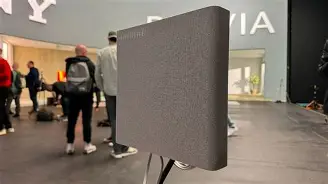
From a physical standpoint, the Bravia Theater Quad follows a minimalist aesthetic—discreet satellite modules and a compact main unit intended to blend with modern living-room décor. Build materials feel premium for the category: dense chassis components, magnetic grilles, and weighted bases for stability. The modular satellite units are small enough to place on shelves or attach to walls with included brackets, and the system's cabling is intentionally minimal to match the "plug-and-play" promise.
However, buyers who value ultra-high-end industrial design will note that this system is not meant to compete with high-fidelity floorstanding speakers. The compact drivers and slim profiles represent a compromise: convenience and space-saving are prioritized over the kind of cabinet resonance that contributes to very low bass extension.
Audio Performance: Real-World Listening
Audio is where the Bravia Theater Quad must justify its name. In practical terms, it delivers a clear midrange and crisp dialogue, which benefits TV shows and films where speech intelligibility matters most. The quad-channel layout helps create a wider soundstage than a typical stereo soundbar, and spatial processing can add perceived height for compatible content.
For movie playback, the Theater Quad reproduces sound effects with convincing directionality during action scenes, and its processing preserves many layers of the soundtrack. Dolby Atmos-enabled tracks processed by the unit deliver some sense of overhead presence, although the effect is less dramatic than systems with upward-firing or dedicated ceiling speakers.
Bass response is adequate for most dialogue-driven content and mid-sized rooms, but it is not as deep or tactile as a true subwoofer-equipped 5.1 system. Turn-up-the-volume moments—car crashes, explosions, or bass-heavy music—feel tighter than thunderous. That makes the system better suited to listeners who prioritize clarity and space savings over theater-shaking rumble.
In gaming, latency is a frequent concern. The Bravia Theater Quad offers a low-latency mode that reduces processing delay, which noticeably improves audio-visual synchronization with modern consoles and PCs. Positional cues are generally accurate, enhancing competitive shooters and open-world titles where sound direction aids navigation.
Connectivity and Smart Features
Connectivity is a major practical consideration for buyers. The Theater Quad includes multiple HDMI inputs with eARC passthrough, optical digital input for older devices, and Bluetooth for mobile streaming. Wireless subwoofer support and Wi-Fi streaming compatibility with common protocols (AirPlay, Chromecast) are also part of the package. For households that rely on smart TV integrations, the system's compatibility with voice assistants and the manufacturer's TV software can simplify control and switching of sources.
Room calibration is implemented via a companion app and on-board microphones. Calibration routinely improves dialogue focus and balances left/right imaging for typical living-room setups. That said, advanced listeners who prefer manual EQ or have acoustically challenging rooms may find the automatic algorithm conservative—prioritizing safety over aggressive corrections that could unlock more dynamic bass at the cost of potential distortion.
Installation and Usability
Ease of installation is one area where the Theater Quad aims to win buyers. The included wall brackets, magnetic grilles, and color-coded cables make placement intuitive. Wireless communication between modules removes many of the traditional speaker-wire headaches. The user interface—both on-device and within the companion app—focuses on straightforward source selection, volume control, and toggling spatial modes.
That simplicity has trade-offs: fewer physical controls on the main unit means reliance on the app or remote. The remote control is serviceable but lacks dedicated presets for specific room profiles, which would be useful for rapidly switching between movie, music, and gaming modes.
Discover deals on Electronics — updated daily.
Browse Now →Durability, Warranty, and Long-Term Considerations
Durability appears consistent with mid- to high-end consumer electronics. While the system does not use exotic materials that guarantee decades of life, reasonable care and normal use should see it through typical ownership cycles. The manufacturer's warranty covers parts and labor for a standard period; buyers should check the exact terms for coverage of wireless modules and battery-operated accessories.
Firmware updates are issued periodically and can improve codec support and calibration. However, buyers should be aware that proprietary spatial processing is a software feature—its long-term value depends on ongoing manufacturer support. If frequent updates are a priority, make sure the vendor's track record for software maintenance matches expectations.
Pros & Cons
- Pros:
- Compact, space-conscious four-channel design that improves soundstage over stereo soundbars.
- Clear dialogue and well-managed midrange for TV and film content.
- Simple installation with minimal visible cabling; satellite modules are flexible for placement.
- Low-latency mode beneficial for gaming and AV sync-sensitive use.
- Good wireless and smart-device compatibility (AirPlay, Chromecast, Bluetooth).
- Cons:
- Bass performance is limited without a dedicated subwoofer; heavy action scenes feel less impactful.
- Spatial/Atmos effects are modest compared to systems with dedicated height channels or up-firing drivers.
- Relies on companion app and remote for many controls; limited manual EQ on the device itself.
- May not satisfy audiophiles seeking high-fidelity, low-distortion performance at high volumes.
- Long-term value tied to ongoing firmware and processing support from the manufacturer.
How the Bravia Theater Quad Compares
To help contextualize where the Theater Quad stands, the following table compares it to two common alternatives: a traditional soundbar with an included subwoofer and a separate 5.1 receiver-plus-speaker bundle. This comparison addresses typical buyer concerns such as space, setup complexity, audio immersion, and suitability for different content types.
| Feature | Bravia Theater Quad | Soundbar + Subwoofer | 5.1 Receiver + Speakers |
|---|---|---|---|
| Space & Footprint | Compact, distributed satellites; minimal footprint | Slim footprint; subwoofer requires floor space | Requires significant space for receiver and multiple speakers |
| Ease of Setup | Very easy; wireless links and app-guided setup | Easy; one long soundbar plus subwoofer pairing | Complex; speaker placement and receiver configuration needed |
| Dialogue Clarity | Excellent due to focused midrange | Good; depends on center-channel emphasis | Best; dedicated center channel usually superior |
| Immersive Surround (Atmos) | Moderate; virtualized height effects | Moderate to good (if up-firing drivers present) | Best; dedicated height/up-firing or ceiling speakers yield strongest Atmos |
| Bass Impact | Limited without optional subwoofer | Good; dedicated subwoofer provides deep bass | Excellent; multiple channels and subwoofer control |
| Price vs Performance | Balanced; aimed at mid-to-upper market | Often best value for punchy bass and simplicity | Higher cost but highest fidelity and scalability |
| Expandability | Moderate; some systems allow subwoofer add-on | Limited; mostly fixed configuration | High; add or upgrade speakers and amps |
Real-World Use Cases
Understanding how the Bravia Theater Quad performs in real settings helps translate specs into daily experience.
Movie Nights in a Living Room
For typical living-room movie nights, the Theater Quad delivers more immersive imaging than a basic stereo setup. Dialogue is clear at low-to-moderate volumes, making it ideal for families who want cinematic detail without overpowering bass. For viewers who prize rumble-heavy effects, pairing with a subwoofer (if supported) or choosing a separate sub model will improve impact.
Gaming
Competitive gamers benefit from the unit's low-latency mode and directional clarity. Positional audio is effective for identifying enemies and environmental cues. Nevertheless, audiophile gamers who stream music or use positional audio professionally may still prefer headphone-based monitoring or a dedicated surround rig.
Apartment or Shared Living
Because the system emphasizes clarity and avoids extreme low-frequency extension, it is friendlier in apartments where neighbors are a concern. The compact satellites reduce clutter and the wireless layout avoids long cable runs that might be impractical in rented spaces.
Music Listening
Theater Quad excels with vocal-centric and acoustic tracks, where midrange transparency matters. However, it is not designed to replace a hi-fi stereo system for critical music listening, particularly for low-frequency-heavy genres like electronic dance music or orchestral works where sub-bass nuance is important.
Buying Guide: What to Consider Before Deciding
This section helps readers evaluate whether the Bravia Theater Quad is the right choice, and outlines steps for making an informed purchase.
1. Define the Primary Use
Decide whether the primary purpose is movies, gaming, music, or a mix. The Bravia Theater Quad leans toward movie and TV clarity with useful gaming features. If deep music fidelity is the priority, compare dedicated stereo systems.
2. Measure the Room
Room size affects perceived bass and soundstage. The Quad suits small to medium rooms best; larger rooms may reveal bass limitations unless supplemented by a subwoofer.
Discover deals on Electronics — updated daily.
See Deals →3. Check Compatibility
Confirm HDMI/eARC compatibility with the existing TV and any consoles. Verify whether the system supports the codecs and streaming protocols the buyer uses regularly.
4. Consider Expandability
Investigate whether a subwoofer or additional speakers can be added later. Systems that allow modular upgrades provide better long-term value.
5. Test for Latency and Sync
For gamers and movie enthusiasts sensitive to lip-sync, test the low-latency or game mode in-store if possible. Check how the system handles pass-through and whether manual delay adjustments are available.
6. Evaluate Installation Constraints
Assess whether the satellite modules can be placed optimally in the room. If wall mounting is necessary, ensure the included brackets and the room's walls are compatible.
7. Review Warranty and Software Support
Confirm warranty length and firmware update policy. Spatial features depend on software; robust manufacturer support preserves features and compatibility over time.
8. Read Multiple Reviews and Demo Carefully
Listen to the system with content representative of everyday use: a dialogue-heavy drama, an action movie, and a game. Real-world demos reveal how the unit handles transitions and complex soundtracks.
Final Thoughts and Conclusion
The Bravia Theater Quad is a thoughtfully engineered middle ground between basic soundbars and elaborate multi-speaker home theater setups. It earns high marks for clarity, ease of installation, and its ability to expand perceived soundstage within a compact footprint. For buyers who prioritize dialogue intelligibility, streamlined setup, and a tidy living-room aesthetic, it is a strong contender.
On the other hand, those seeking earth-shaking bass, the most convincing Dolby Atmos experience, or the ultimate audio fidelity should carefully consider alternatives or the potential addition of a dedicated subwoofer and more advanced speaker placement. The system's long-term value also depends on ongoing firmware support for spatial processing and codec compatibility.
In short: the Bravia Theater Quad is worth considering if its strengths align with a buyer's living situation and listening priorities. Prospective purchasers should weigh room size, content preferences, and whether they are willing to accept modest bass trade-offs for the convenience and improved soundstage this compact system delivers. Reading reviews, testing the unit with familiar content, and confirming upgrade paths will ensure the final decision matches expectations and real-world use.