Spec Battle: Fiio Ft13 vs Tribit Pocketgo — Is It Worth Upgrading?
Introduction
When shoppers think about improving their everyday listening experience, the path to “better sound” is rarely one-size-fits-all. The Fiio Ft13 and the Tribit Pocketgo target different listening needs: one leans into personal, detail-oriented listening while the other solves for portability and shared enjoyment. This article breaks down how these two contenders compare in practical use, what buyers typically care about, and whether moving from one to the other makes sense depending on real-world scenarios.
How to read this comparison
The goal here is not to crown a universal winner but to outline which product suits which listener. The analysis focuses on sound character, ergonomics, connectivity and convenience, real-world use cases, and value for money. Pros and cons for each product are listed so readers can quickly match strengths to personal priorities.
Product overview
Fiio Ft13 — Personal, detail-first listening
The Fiio Ft13 positions itself as an in-ear monitor (IEM) option for listeners who prioritize clarity, instrumental separation, and a focused listening experience. Typically aimed at audiophiles or anyone who prefers a private listening environment, products in this class often emphasize wired connections or wired-capable high-resolution playback, low distortion, and a more analytical tuning. A listener choosing an IEM like the Fiio Ft13 is usually looking for precise imaging, tight bass control, and strong midrange detail for vocals and acoustic instruments.
Tribit Pocketgo — Portable speaker for shared listening
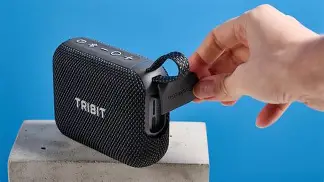
The Tribit Pocketgo is a compact, battery-powered Bluetooth speaker built for on-the-go scenarios where portability, durability, and ease-of-use matter more than absolute fidelity. It’s designed to deliver punchy, room-filling sound from a small enclosure, with a focus on battery life, wireless convenience, and the ability to handle outdoor environments. Buyers gravitate toward it for picnics, small gatherings, and travel when sharing audio with others is the priority.
Detailed analysis
1. Sound and tuning
Fiio Ft13: The Ft13, as an IEM, delivers a listening profile that leans toward clarity and detail. Listeners can expect emphasized midrange presence (important for vocals), controlled low end, and more defined highs. The nature of in-ear monitors means superior isolation from ambient noise, which contributes to the perception of resolution and nuance. For users listening to acoustic, classical, or vocal-centric music, this clarity can be immediately noticeable.
Tribit Pocketgo: The Pocketgo offers a different sonic priority: perceived loudness and bass impact. Portable speakers are designed to sound fuller in open spaces and to translate energy into a small form factor. The tuning usually favors bass and upper-bass to give tracks a lively, fun character, sometimes at the expense of fine detail and microdynamics that an IEM would reveal.
2. Use case and ergonomics
Fiio Ft13: Ideal for commuting, focused listening at a desk, or any scenario where the listener wants to be immersed in the mix. Being in-ear, comfort and fit are key — a good seal improves bass and isolation. Many buyers will use the Ft13 with a portable digital audio player (DAP) or a phone with a quality DAC/amp for the best results.
Tribit Pocketgo: Best for social situations, outdoor activities, and casual listening where multiple people want to hear the same source. The Pocketgo’s form factor supports hands-free use and usually includes easy Bluetooth pairing and long battery life, making it straightforward to move between locations without additional gear.
3. Connectivity and compatibility
Fiio Ft13: Wired IEMs excel when connected directly to a source with a dedicated DAC/amp. That said, some Fiio models also support detachable cables or balanced terminations, offering flexibility for upgrades. Buyers should consider their source device — mobile phones may require adapters or volume/impedance considerations.
Tribit Pocketgo: Bluetooth convenience is the Pocketgo’s primary advantage. It typically supports common codecs and quick pairing and is compatible with virtually any smartphone, tablet, or laptop without the need for adapters. The trade-off is the lossy nature of Bluetooth (codec-dependent) and occasional latency for video content.
Looking for the best Audio & Headphones deals on Amazon?
Browse Now →4. Portability, battery, and durability
Fiio Ft13: Extremely portable given the small size of IEMs, and there’s no battery requirement for most wired models. Durability depends on cable quality and housing construction; detachable cables increase longevity because they can be replaced. For travelers, the Ft13 fits easily into pockets and small cases.
Tribit Pocketgo: Designed to withstand outdoor conditions — many compact Bluetooth speakers offer splash- or water-resistance ratings, rugged housing, and long runtimes. Charging convenience (USB-C on modern units) and multi-device pairing are further conveniences for frequent movers.
5. Practical performance in environments
In noisy, crowded, or windy outdoor environments, an IEM like the Ft13 can offer a superior listening experience because it isolates, requiring lower volume and reducing the impression of muddiness. Conversely, when sharing with a group or when physical immersion is less important than presence and volume, the Pocketgo is purpose-built to carry sound across space and weather conditions better than small headphones.
Pros & Cons
Fiio Ft13
- Pros: Excellent detail and instrument separation; strong vocal clarity; low power consumption (if wired); highly portable; great for focused, private listening sessions.
- Cons: Not suited for shared listening; effectiveness depends on source/DAC; fit and comfort vary by ear anatomy; less convenient for outdoors if wired without a suitable mobile setup.
Tribit Pocketgo
- Pros: Easy wireless pairing; built for sharing audio; robust for outdoor use; typically long battery life; no need for additional source hardware.
- Cons: Limited detail and staging compared with IEMs/headphones; Bluetooth introduces codec-dependent lossy audio; can struggle in very windy or noisy environments to present clarity.
Comparison table
| Feature | Fiio Ft13 | Tribit Pocketgo |
|---|---|---|
| Product type | In-ear monitor (personal) | Portable Bluetooth speaker (shared) |
| Best for | Focused, critical listening; commuting; travel | Outdoor hangouts; travel with friends; casual home use |
| Sound signature | Detail-oriented, controlled bass, clear mids | Punchy bass, warm presentation, emphasis on loudness |
| Isolation | High (in-ear seal) | Low (open-space sound) |
| Portability | Extremely portable, pocketable | Compact but bulkier than IEMs |
| Battery | Usually none (wired) — no charge needed | Built-in battery — rechargeable |
| Connectivity | Wired, may support detachable cables; works best with good source/DAC | Bluetooth wireless; plug-and-play with most devices |
| Durability | Depends on cable/housing; replaceable cables extend life | Often rugged and water-resistant |
| Typical buyer concerns | Sound accuracy, comfort, source compatibility | Battery life, loudness, ruggedness, wireless ease |
Real-world use cases — who should choose which?
Below are typical buyer profiles and how either product fits.
Commute and concentrated listening
For someone who listens to podcasts, jazz, or detailed acoustic recordings on a train or bus, the Fiio Ft13 is the better choice. Its isolation and clarity mean less need to crank volume to overcome ambient noise and a consequently more enjoyable listening experience.
Outdoor social events
For picnics, small outdoor gatherings, or trips to the beach where one device needs to serve multiple listeners, the Tribit Pocketgo is a practical winner. It removes the need to share earbuds and offers immediate volume and presence suitable for background music or casual dancing.
Travel with minimal gear
If an itinerary calls for both private listening and group scenarios, the choice depends on priorities. The Ft13 is ultra-compact but may require adapters or a portable player for optimal performance. The Pocketgo covers both solo and group listening more conveniently since it is all-in-one.

Home desktop upgrades
At a desk, the Ft13 paired with a modest DAC/amp or a good phone can deliver a superior experience for focused listening, gaming, or critical playback. The Pocketgo may serve as a supplementary device for conference calls or casual music at the desk but won’t match the intimacy of in-ear monitors.
Buying guide — what to consider before upgrading
When deciding whether upgrading from one product type to the other is worth it, buyers should weigh the following practical factors.
1. Primary listening scenario
Identify where most listening happens. If the majority of sessions are solitary — commuting, work, or late-night listening — an IEM upgrade (Fiio Ft13) can be transformative. If sharing and portability for groups are frequent, a portable speaker like the Pocketgo is more pragmatic.
Looking for the best Audio & Headphones deals on Amazon?
See Deals →2. Source device and compatibility
Wired IEMs often shine when paired with higher-quality sources or an external DAC/amp. If a phone is the primary source and codec support or adapters are a hassle, a Bluetooth speaker may be simpler to use day-to-day.
3. Environment and isolation needs
Consider noise levels where the device will be used. In loud environments, the isolation of IEMs reduces the need for higher volumes. Conversely, in quiet home environments where sharing is common, a speaker’s open sound may be preferred.
4. Comfort and long-term use
Fit can make or break an IEM. Buyers who suffer from ear fatigue or who wear devices for long stretches should audition different ear-tip sizes and shapes. For speakers, ergonomics center on weight, grip, and how easy it is to carry during day trips.
5. Durability and weather resistance
For outdoor usage, seek rated water and dust resistance in speakers. If the Fiio Ft13 is intended for active use, buyers should check build materials and whether a detachable cable is available to minimize single-point failures.
6. Budget and value
Upgrading should deliver tangible benefits for the budget spent. The Ft13 will likely represent a step up for listeners who currently use generic earbuds and crave clarity. The Pocketgo, when replacing a weaker portable speaker, usually provides a direct upgrade in battery life and robustness. Evaluate how frequently the device will be used to justify the price.
Practical tips for auditioning
- Bring familiar tracks: Use songs with clear vocals, bass, and complex arrangements to judge separation and tonal balance.
- Test with real-world sources: If the intended use is with a phone, test the product with that phone rather than a high-end player, unless a DAC/amp will be part of the setup.
- Try in the intended environment: If buying for commute use, test in a noisy space; for outdoor speaker purchases, listen in an open area.
- Assess comfort for extended wear: For IEMs, wear them for 20–30 minutes to check for fatigue; for speakers, assess portability and grip over time.
Is it worth upgrading?
“Worth” depends entirely on what the listener wants to improve. If the current experience is limited by lack of detail, muddled midrange, or earbud discomfort, upgrading to a well-tuned IEM such as the Fiio Ft13 will likely feel like a meaningful enhancement. On the other hand, if the main complaint is lack of shared volume, poor battery life, or fragility in outdoor settings, moving to a rugged portable speaker like the Tribit Pocketgo delivers the most practical benefits.
For many buyers, the ideal solution may not be a direct swap but an addition: keep a compact speaker for shared scenarios and add a pair of IEMs for private listening. That approach addresses all common listening contexts without forcing a compromise.
Conclusion
The Fiio Ft13 and the Tribit Pocketgo serve distinct listening philosophies. The Ft13 rewards listeners who prioritize clarity, isolation, and a more analytical sound for solo listening sessions. The Pocketgo excels at convenience, durability, and sharing music with others. An “upgrade” is worth it only when the new product addresses a current pain point — whether that is detail and fidelity or wireless convenience and portability. Buyers should match the product to how they listen most often: choose the Ft13 for concentrated personal listening and the Pocketgo for on-the-go shared experiences.